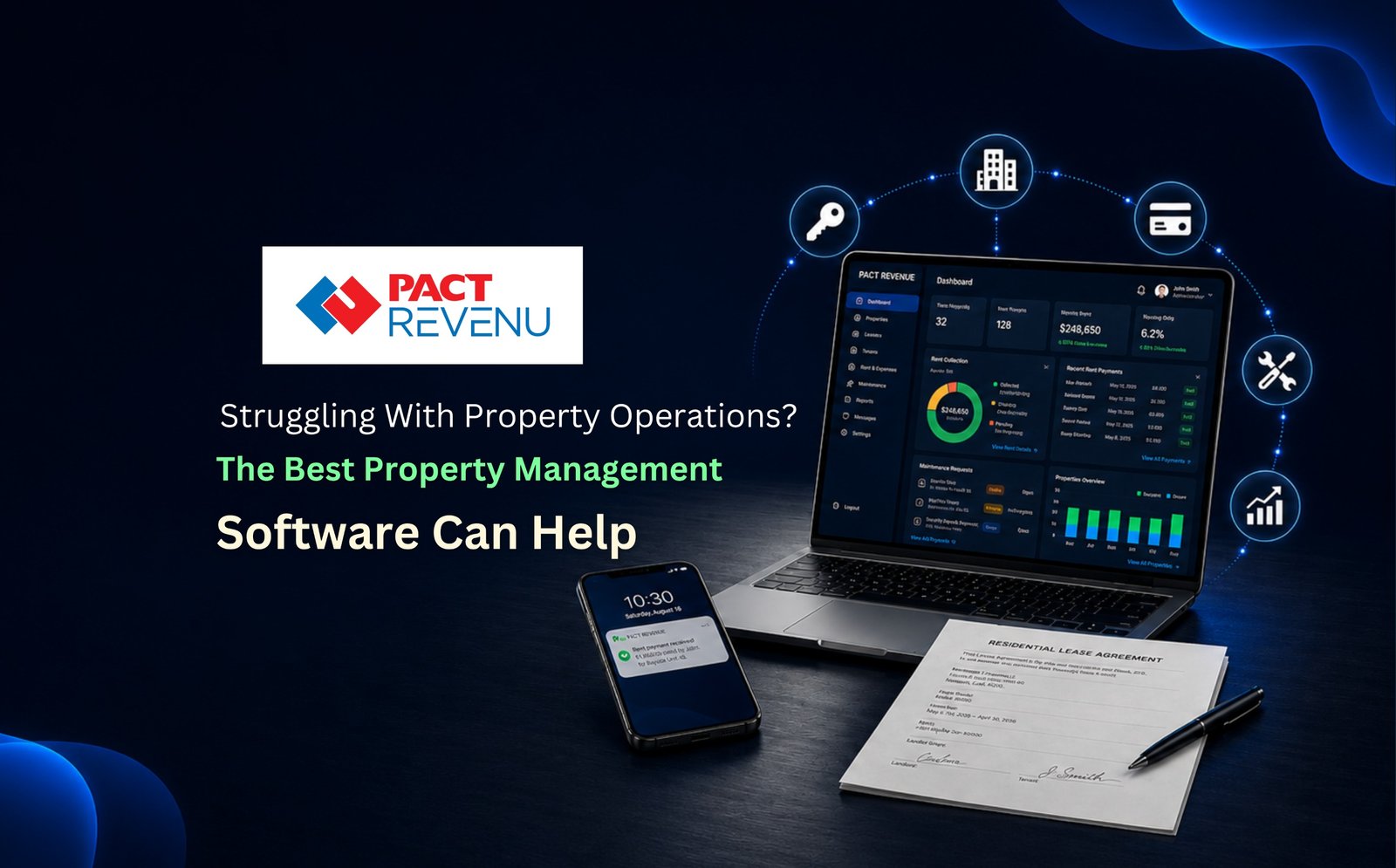
Struggling With Property Operations? The Best Property Management Software Can Help
Managing a handful of properties is one thing. Managing a portfolio spread across Chennai, Bangalore, Mumbai, Hyderabad, Pune, and Delhi is an entirely different challenge.
Most property teams start out lean and capable. Someone tracks rent on a spreadsheet. Maintenance requests come through WhatsApp. Lease renewals get flagged in an email thread. It works — until it does not.
The moment your portfolio crosses a certain size, or your team starts handling mixed assets like residential towers, commercial office spaces, retail units, and staff housing all at once, the cracks begin to show. Payments get missed. Vendors do not get followed up with. A tenant raises a complaint that sits unresolved for a week because no one knew who was responsible.
This is where Property Management Software India businesses are increasingly turning to is making a real difference — not by adding complexity, but by removing it.
The Everyday Challenges That Slow Indian Property Teams Down
If you have been in real estate operations for a few years, most of what follows will feel familiar.
Spreadsheets stop scaling at some point. They work beautifully for 20 units. By the time you are managing 200 across multiple cities, you are chasing updates across different files, versions, and inboxes. A missed formula or a forgotten entry can throw off your entire rent reconciliation for the month.
Rent tracking becomes a constant follow-up exercise. In a multi-property setup, knowing who has paid, who has not, and who is two months overdue should not require a daily audit. But without a centralized system, that is exactly what many finance teams are doing — checking payment screenshots, calling relationship managers, and updating records manually.
Maintenance handling is where tenant trust actually breaks. A complaint raised on Monday that gets resolved on Friday — with no update in between — tells a tenant everything they need to know about how the property is managed. Across Indian cities, where tenant expectations have shifted sharply in the past five years, delayed maintenance handling is one of the most common reasons occupancy dips at renewal time.
Tenant communication has no single thread. One manager uses email. Another uses WhatsApp. A third responds via phone calls that never get logged. When a tenant later disputes a conversation or a commitment, there is no record to fall back on.
Multi-location reporting is mostly guesswork. Ask a typical mid-sized property company in India for a live view of vacancy rates, overdue rent, pending work orders, and contract expiry dates across all their sites — and most will tell you they need a day or two to pull it together. That is not a people problem. It is a systems problem.
How Property Management Software Simplifies Daily Operations
Good property management software does not replace your team. It gives your team the structure they need to do their jobs without constantly fighting the process.
Centralized property data changes everything. When tenant records, lease documents, payment history, and service requests all live in one place, a manager can answer a tenant question confidently in two minutes instead of making three calls to find out. That responsiveness builds trust — and trust is what keeps tenants renewing.
Lease and contract management becomes proactive instead of reactive. A good Lease Management Software India solution sends automated alerts weeks before a contract expires, well before it is too late to negotiate a renewal. It tracks escalation clauses, security deposit amounts, lock-in periods, and key dates without anyone having to remember them.
Automated workflows reduce the human error problem. Rent reminders, recurring invoices, approval escalations, and routine follow-ups can all be automated with rules. When a team is not spending half its day on repetitive admin, it can focus on things that actually need human judgment — vendor selection, tenant relationships, expansion planning.
Maintenance tracking becomes a managed process. When a tenant logs a complaint, the system assigns it, tracks it, and flags it if it stalls. Managers get visibility without having to ask for updates. Tenants get timely responses. Everyone knows where things stand.
Vendor coordination stops relying on memory. A solid property management system maintains vendor records, tracks service history, and connects work orders to approvals and payments. When something breaks at a property in Pune on a Tuesday morning, the right vendor is identified and contacted without anyone flipping through a contact list.
Reporting becomes a by-product of daily work, not a separate task. When data is captured as work happens — payments posted, leases updated, requests resolved — reports generate themselves. Occupancy trends, overdue rent, maintenance resolution times, and site-level performance are all visible without a manual consolidation exercise.
Why ERP Integration Matters for Real Estate Businesses in India
Property management does not happen in isolation. Finance, procurement, HR, and operations all intersect with your real estate portfolio. That is why standalone property tools have a ceiling — and why Real Estate ERP Software India has become an increasingly important topic for enterprise property operators.
When your ERP for Real Estate Companies integrates properly with your property management layer, the benefits compound quickly.
Finance integration eliminates double entry and its downstream errors. Rent receipts, vendor invoices, credit notes, and owner disbursements flow between systems without manual reconciliation. Your accounts team is not correcting mismatches at month-end — they are reviewing clean data that was captured correctly the first time.
Procurement and vendor management become controlled processes. A maintenance job does not just get done — it gets approved, budgeted, assigned to an empanelled vendor, and paid through a traceable workflow. That level of control is hard to achieve without integration, and it matters enormously when you are operating across multiple branches or entities.
Approval workflows scale with your organizational complexity. Multi-location Indian enterprises often have layered approval structures. A centralized system with configurable approval paths ensures that nothing moves forward without the right sign-offs — whether you are renewing a lease in Hyderabad or processing a capital expense in Mumbai.
Multi-branch operations get a single operational view. When each city or site runs on its own spreadsheets or disconnected tools, leadership is always working with incomplete information. An integrated platform gives head office the same visibility as the site team — in real time, not after a weekly report.
Real-time reporting across the portfolio becomes actionable. When your real estate management solution shares a data layer with your finance and operations systems, leaders can compare performance across properties, identify outliers early, and make decisions based on current numbers rather than last month’s consolidated file.
For Indian enterprises managing hundreds of units across multiple cities, that kind of integration is not a luxury. It is what separates businesses that scale well from those that grow into complexity they cannot manage.
What to Look For Before Choosing Property Management Software in India
The software market has no shortage of options. The challenge is not finding a tool — it is finding the right one for how your business actually works today and how it needs to work two or three years from now.
Scalability should be a first-filter question, not an afterthought.
Can the system handle the number of properties and users you expect to have in three years? Does it support multiple entities, business units, or legal structures? Can user roles and access controls be configured as your team grows? If the honest answer is “we are not sure,” keep looking.
Mobile accessibility matters more than most teams admit upfront.
Property work happens on site, not at a desk. Facility managers, inspection teams, and maintenance supervisors need to log updates, review requests, and access tenant information from their phones. A property software for builders and operators that lacks mobile functionality will see poor adoption from field teams regardless of how good the desktop version is.
Implementation support separates good software from good outcomes.
Many teams have bought well-reviewed software that never quite worked for them because the rollout was poorly managed. Ask vendors specifically about data migration, onboarding timelines, and who supports your team after go-live. A responsive, India-based support team makes a meaningful difference when operational questions arise.
Dashboards and reporting need to match how your leadership thinks.
Generic reports that require heavy customization to answer basic questions are a hidden cost. Before committing, ask to see the standard reports and confirm they reflect the metrics your finance team, operations head, and property managers actually track.
Multi-location management should be native, not bolted on.
If the system was built for single-site operations and multi-location support was added later, it often shows — in clunky navigation, inconsistent data views, and reporting limitations. For businesses operating across Indian cities, multi-location capability should be core to the platform architecture.
Closing Thoughts
There is a point in every growing property business where doing things manually starts costing more than it saves. The errors, the delays, the missed renewals, the reactive maintenance — these are not signs of a weak team. They are signs of a team that needs better systems.
Property Management Software India businesses are choosing today is about more than digitizing paperwork. It is about giving managers clear information, automating the routine, connecting the dots between departments, and building the operational foundation that lets a company grow without growing chaotic.
At PACT REVENU, we work with property management companies, real estate developers, and enterprise operators across India who are navigating exactly this transition. The businesses that handle it well are not necessarily the largest — they are the ones that invested in the right systems at the right time.
If you are evaluating your current setup or exploring options for the first time, the best next step is a practical conversation. Not a product pitch — a walkthrough of how your operations work today and where a connected property management platform might simplify them. Reach out to the PACT REVENU team when you are ready for that conversation.
Frequently Asked Questions
What is property management software, and do smaller property companies in India need it?
Property management software is a platform that centralizes rent tracking, lease management, tenant communication, maintenance coordination, and reporting in one system. Smaller companies with growing portfolios often benefit from it earlier than they expect — the cost of errors, delays, and missed renewals tends to outpace the cost of the software itself once a business crosses a certain scale.
How does ERP integration work with property management systems?
Integration typically connects your property platform with your finance and accounting system, procurement workflows, and operational tools so that data flows between them automatically. This means vendor payments, rent receipts, budget tracking, and approval workflows are linked — reducing manual entry and giving leadership a single, reliable view of operations.
What is the difference between a property management system and real estate ERP software?
A property management system focuses on operational tasks — leases, tenants, maintenance, rent collection, and reporting. Real estate ERP software covers a broader scope, including finance, procurement, HR, and multi-entity management. Many growing Indian businesses need both, which is why integrated platforms that handle both layers are increasingly the preferred choice.
How long does it typically take to implement property management software?
Implementation timelines vary depending on portfolio size, the complexity of existing data, and how many integrations are required. A focused rollout for a mid-sized portfolio can often be completed within eight to twelve weeks. The more important question is whether your vendor provides dedicated implementation support and structured training — the timeline matters less than the quality of the setup.
What should Indian real estate companies prioritize when evaluating lease management software?
Look for a system that handles Indian lease structures accurately — including escalation clauses, lock-in periods, TDS deductions, GST implications, and security deposit management. Multi-currency support matters if you have international tenants or landlords. And ensure the system can handle mixed portfolios — residential, commercial, and retail — if that reflects how your business operates.