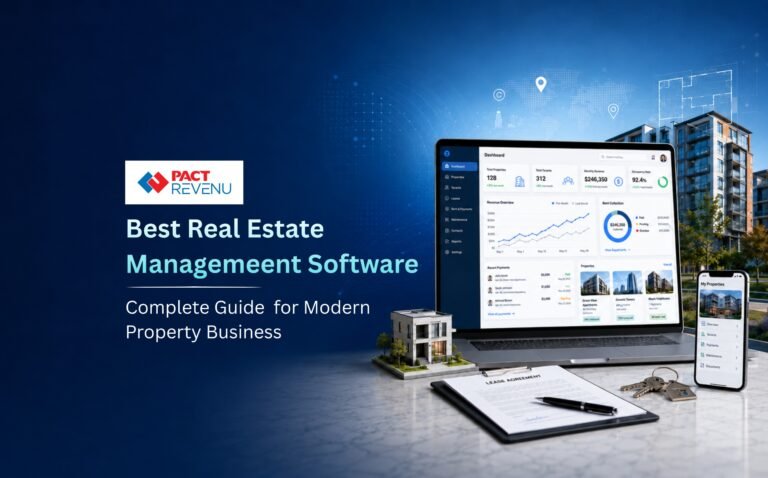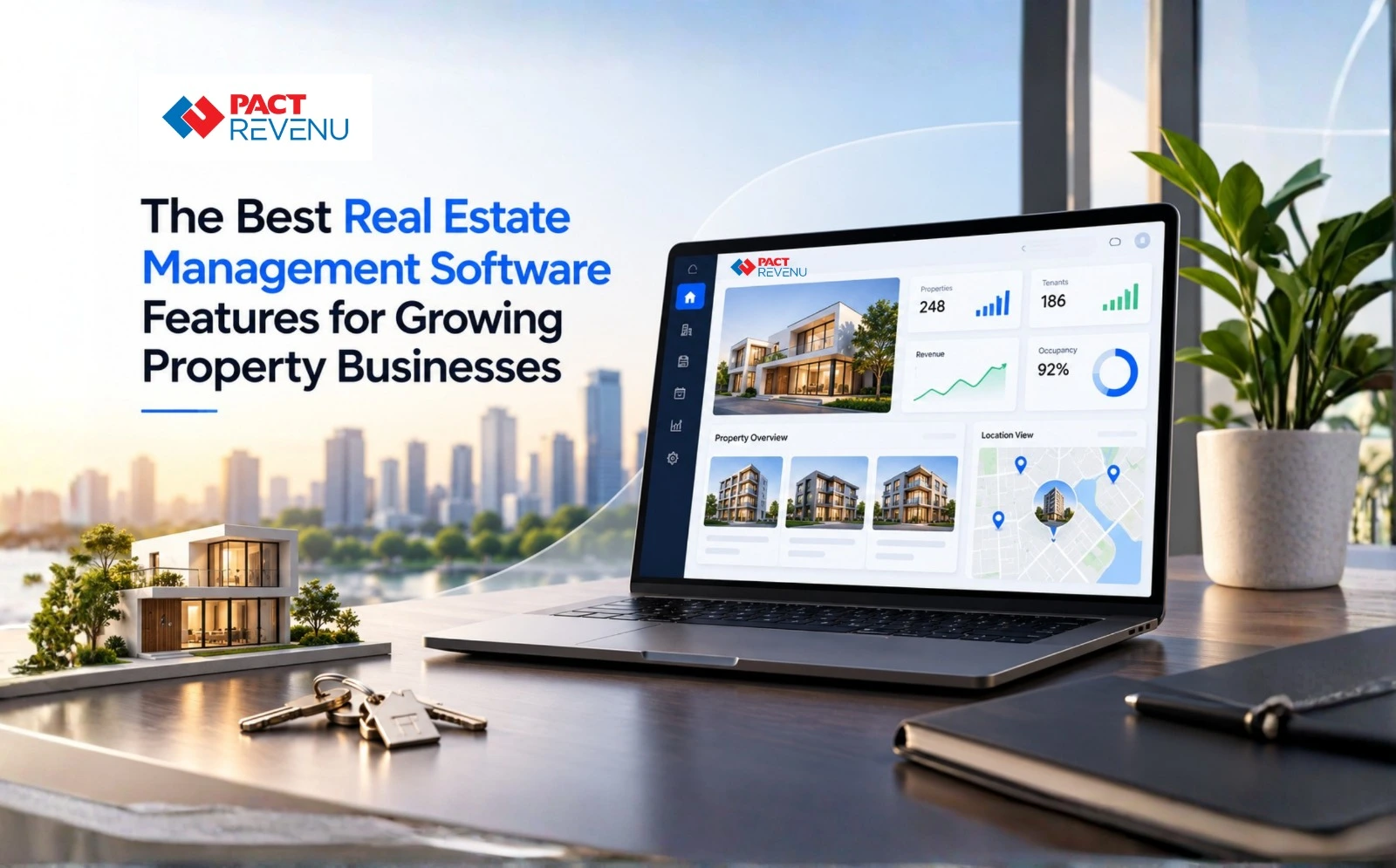
The Best Real Estate Management Software Features for Growing Property Businesses in India
Managing a growing property portfolio is very different from managing a few properties manually. As the number of properties, tenants, leases, payments, maintenance requests and documents increases, spreadsheets and disconnected systems can quickly become difficult to manage.
This is where real estate management software can make a measurable difference. Instead of switching between spreadsheets, emails, accounting tools and paper records, property businesses can bring important operations into one centralized platform.
For Indian property businesses, the right software should do more than store property information. It should help teams manage tenants, track leases, monitor collections, coordinate maintenance, generate reports and make informed business decisions.
What Is Real Estate Management Software?
Real estate management software is a digital platform designed to help property owners, managers, developers and real estate businesses manage day to day property operations from a centralized system.
Depending on the platform, it can support property records, tenant management, lease administration, rent and payment tracking, maintenance workflows, accounting integration, document management, reporting and more.
For a growing Indian property business, the main advantage is simple: less manual coordination and better visibility across the property portfolio.
Why Are More Property Businesses Moving Beyond Spreadsheets?
Spreadsheets can be useful when the portfolio is small. But as operations expand, manually maintaining information becomes increasingly difficult.
Consider a property manager handling multiple buildings with dozens or hundreds of tenants. A single spreadsheet may contain rent information, while lease documents are stored in folders and maintenance requests arrive through WhatsApp or email.
This creates several practical problems:
- Duplicate or outdated information
- Missed payment follow ups
- Difficulty tracking lease expiry dates
- Slow maintenance coordination
- Limited visibility into property performance
- Time consuming monthly reporting
- Greater dependency on individual employees
A centralized system creates a single source of operational information, making it easier for teams to work with consistent and updated data.
Key Features to Look for in Real Estate Management Software
Not every property business needs the same functionality. However, certain features become increasingly important as your portfolio grows.
1. Centralized Property and Unit Management
A growing business needs a clear view of every property and unit.
The software should allow teams to organize information such as:
- Property details
- Building and unit information
- Occupancy status
- Tenant information
- Lease details
- Property related documents
- Available and occupied units
Instead of searching through multiple files, employees can access relevant information from a centralized dashboard.
This becomes particularly useful when a company manages residential, commercial, or mixed use properties across different locations in India.
2. Tenant and Occupancy Management
Tenant information is at the heart of day to day property operations.
A good system should make it easy to maintain tenant profiles, assign tenants to units, monitor occupancy and access relevant agreements and records.
For property managers, this reduces the need to repeatedly search through emails or spreadsheets whenever a tenant related question arises.
It also gives management better visibility into occupied, vacant and upcoming available units.
3. Lease and Contract Tracking
Lease administration can become complicated when multiple agreements have different start dates, expiry dates, renewal terms and payment schedules.
Real estate management software should help businesses track important lease information and receive timely reminders for upcoming actions.
Important information to monitor includes:
- Leases approaching expiry
- Upcoming renewals
- Contract start and end dates
- Tenant specific terms
- Important documentation
- Renewal opportunities
This proactive approach can help reduce avoidable administrative delays and improve tenant communication.
4. Rent and Payment Management
Rent collection is one of the most important financial processes in property management.
Instead of relying entirely on manual registers or spreadsheets, businesses can use software to monitor payment schedules, outstanding amounts, receipts and collection status.
A centralized payment view can help managers quickly answer questions such as:
Which tenants have paid? Which payments are overdue? How much is outstanding?
This visibility can make follow ups more systematic and help management monitor recurring income more effectively.
5. Maintenance Request Management
Maintenance issues directly affect tenant satisfaction and property value.
A broken lift, plumbing problem, electrical issue, or delayed repair can become a bigger problem when there is no clear process for assigning and tracking requests.
A typical maintenance workflow can include:
- Record the maintenance request.
- Assign it to the appropriate person or vendor.
- Track its progress.
- Update the status.
- Record completion details.
This creates accountability and makes it easier for property managers to identify recurring maintenance issues.
6. Accounting and Financial Visibility
Property operations and financial management are closely connected.
The ideal system should provide visibility into property related income and expenses and, where required, integrate with accounting or ERP processes.
Management can use financial information to understand:
- Rental income
- Outstanding collections
- Property expenses
- Maintenance costs
- Operational performance
- Portfolio level financial trends
For growing businesses, this information can support better budgeting and investment decisions.
7. Document Management
Property businesses deal with a large volume of documentation, including agreements, invoices, tenant records, maintenance documents and other property related files.
A centralized document management capability can make these records easier to organize and retrieve.
Access controls are also important because property systems may contain personal and business information. Businesses should evaluate user permissions, access controls, backup processes and security practices before implementing a platform.
8. Reporting and Analytics
Business growth requires more than operational data. Managers need actionable insights.
Useful reports can answer questions such as:
- Which properties generate the highest rental income?
- What is the current occupancy position?
- Which payments are overdue?
- Which leases require attention?
- How much is being spent on maintenance?
- Which properties require closer monitoring?
Instead of preparing reports manually every month, teams can use dashboards and automated reporting to spend more time analyzing results and less time compiling data.
9. Cloud Based Accessibility
A cloud based real estate management software solution can be especially useful for businesses with multiple properties, branches, or field teams.
Authorized users can access information through supported devices without depending on a
single office computer or locally stored spreadsheet.
For example, a property manager visiting a site can check relevant tenant, lease, or maintenance information without waiting for another employee to send the latest file.
However, businesses should evaluate security, user permissions, data backup, uptime, integrations and vendor support before choosing a cloud platform.
10. Scalability and Integration
A solution that’s effective for 20 property might not be suitable if the business develops to 200.
Scalable must therefore be integrated into the choosing process from the start.
Look for software that can support increasing numbers of:
- Properties
- Units
- Tenants
- Users
- Transactions
- Documents
- Reports
Integration capabilities are equally important. A real estate platform should ideally work with other essential business systems instead of creating another isolated data source.
How Can Real Estate Management Software Help Indian Businesses Grow?
The biggest benefit is not simply automation. It is operational visibility.
When property information, tenant records, leases, payments, maintenance activities and reports are connected, management can make decisions using more complete information.
For Indian real estate management companies, this can be particularly valuable when managing properties across multiple locations or growing the portfolio rapidly.
For example, instead of asking an employee to manually compile the status of every property, management can use centralized dashboards to identify important exceptions and focus attention where it is actually needed.
That shift from manually collecting information to managing through business visibility can make a significant difference as the organization scales.
How to Find the Ideal Real Estate Management Software
Before investing in a platform, start with your actual operational problems rather than the number of features listed on a vendor’s website.
Identify Your Current Challenges
Ask what takes the most time today.
Identify repetitive processes such as:
- Rent tracking
- Lease monitoring
- Reporting
- Tenant communication
- Document retrieval
- Maintenance coordination
Consider Your Team and User Requirements
Determine how many people need access to the system.
Consider property managers, finance teams, administrators, executives and other authorized users.
Check Scalability
Choose a platform that can accommodate additional properties, users, transactions and business processes as your organization grows.
Evaluate Implementation and Support
Software adoption depends heavily on onboarding, training, data migration and ongoing support not just the technology itself.
If you are searching for real estate management companies near me, remember that technology requirements can differ depending on whether you are a property owner, developer, facility manager, or professional property management company.
Why PACT REVENU Can Be a Practical Choice for Growing Businesses
For organisations that want to combine property operations with larger business operations, a fully integrated ERP solution might offer benefits beyond separate property tracking.
PACT REVENU was developed to assist enterprises in transforming essential operating and management activities into a seamless corporate environment.
This technique can help a developing real estate firm simplify divided workflows and offer administration with more insight into business operations.
The right solution should ultimately make your team’s work easier—not add another complicated system to manage.
Conclusion
Developing a property business entails greater than simply increasing properties and customers. As operations become larger, businesses need structured processes, reliable information and better visibility.
The right real estate management software can help centralize property records, manage tenants and leases, monitor payments, coordinate maintenance, organize documents and generate useful management insights.
For Indian property businesses, the priority should be choosing a solution that fits today’s workflow while remaining flexible enough for tomorrow’s growth.
Ready to Simplify Your Property Operations?
Explore how PACT REVENU can help your business bring critical processes together, improve visibility and build a more scalable management workflow.
Contact the PACT REVENU team anytime to discuss a solution customised for your organization’s needs.
Frequently Asked Questions
1. What is real estate management software?
Real estate management software is a centralized online system for handling property details, rentals, leases, payment, service, records, reports, and other properties-related activities.
2. What functions should real-estate management software offer?
Key functions include property and apartment administration, property management, contract monitoring, rent and payment management, maintenance administration, document management, reports, user permissions, connectors, and cloud access.
3. Is cloud-based real estate management software suitable for emerging a business?
Yes. Cloud based platforms can provide authorized users with convenient access to business information while supporting multiple properties, locations and users. Businesses should evaluate security, backups, permissions, integrations and vendor support before selecting a solution.
4. Can real estate management software assist minimise manual labour?
Yes. It can reduce repetitive administrative work by centralizing records, automating reminders and workflows, simplifying reporting and providing a single place to monitor property operations.
5. How can I choose the right software for my real estate business?
Start by identifying your current operational challenges, such as payment tracking, lease management, maintenance, reporting, or fragmented data. Then, evaluate software using features, scalability, integration, protection, usability, execution, and continuing assistance.