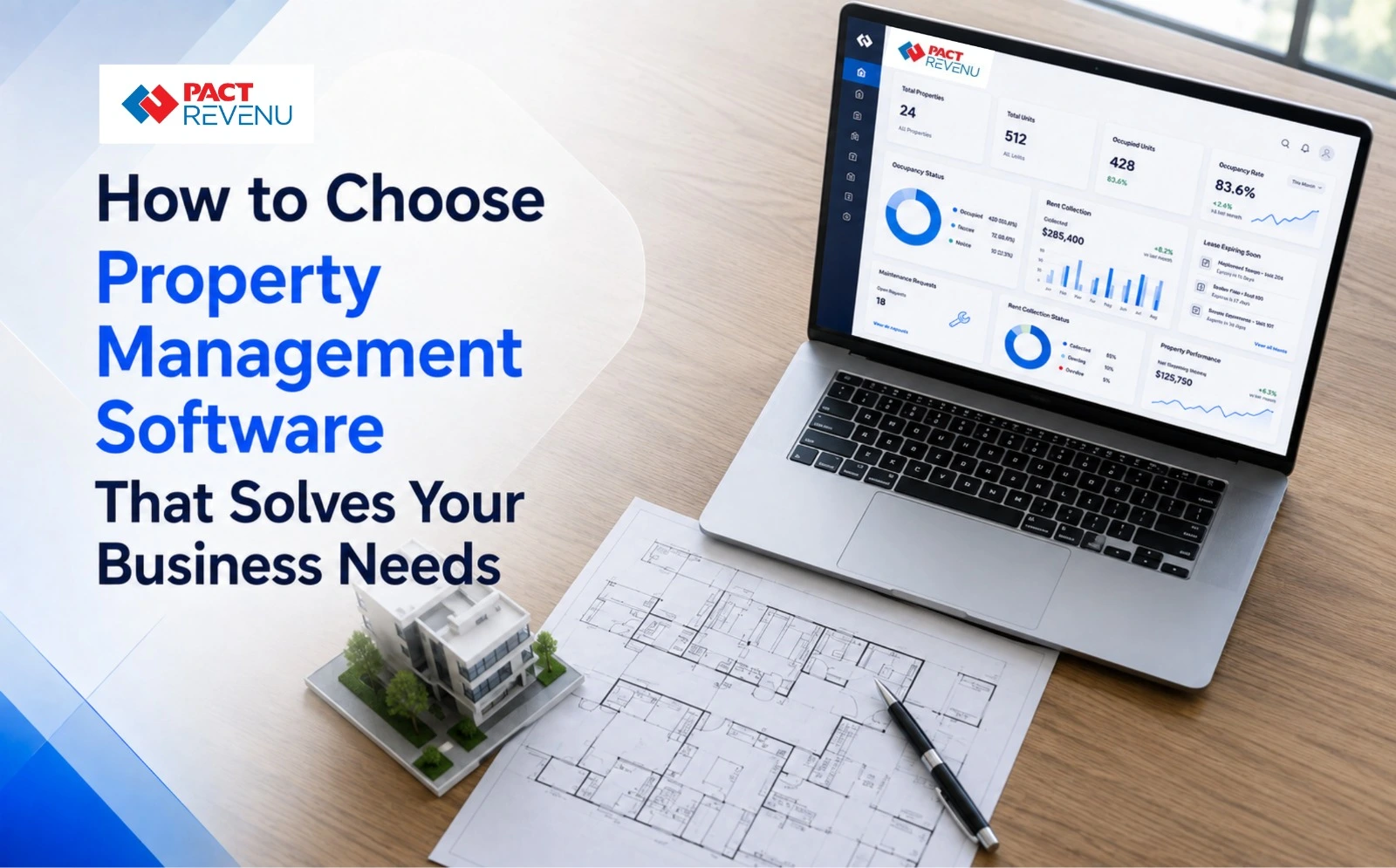
How to Choose Property Management Software That Solves Your Business Needs
Managing properties sounds simple until the day to day work starts piling up. Rent collection, tenant communication, lease renewals, maintenance requests, expenses, documentation and financial reporting can quickly become difficult to manage when information is spread across spreadsheets, emails, WhatsApp messages and separate accounting tools.
This is where Property Management Software can make a practical difference. the right software does more than store property information. It connects important processes, reduces repetitive work, improves visibility and helps property managers make faster business decisions.
For property businesses in India, choosing the right solution also means considering local business practices, financial workflows, GST related requirements, scalability and ease of use.
But with so many options available, how do you know which solution actually fits your business?
The answer is not to choose the software with the longest feature list. Instead, look for a platform that solves your current operational challenges while supporting your future growth.
What Is Property Management Software?
Property Management Software is a digital platform designed to help businesses manage property related operations from a centralized system.
Based on the fix, it might assist with handling:
- Property and unit information
- Tenant records
- Lease and agreement details
- Rent collection and payment tracking
- Maintenance requests
- Expenses and income
- Property related documents
- Financial reports
- Notifications and reminders
- Business performance insights
For property managers handling multiple buildings, commercial spaces, residential units, or rental portfolios, having these functions in one system can reduce manual work and improve operational control.
Instead of searching through multiple files to understand the status of a property or tenant, your team can access relevant information from a centralized platform.
Why Do Property Businesses Need a Centralized System?
Many property businesses start with spreadsheets because they are inexpensive and easy to set up. However, as the number of properties and tenants increases, spreadsheets can become difficult to maintain.
For example, imagine managing 200 rental units.
Your team may need to track:
- Who has paid rent
- Which leases are expiring
- Which tenants have outstanding payments
- Which maintenance requests are pending
- How much was spent on each property
- Which properties are generating the highest returns
When this information is maintained manually, mistakes and delays become more likely.
A centralized platform can bring these activities together and give managers a clearer view of their operations.
This is particularly useful for property management companies managing properties on behalf of multiple owners, as well as businesses managing their own property portfolios.
7 Things to Consider Before Choosing Property Management Software
1. Identify Your Actual Business Problems
Before comparing software providers, identify what is slowing your team down.
Ask questions such as:
- Are rent payments being tracked manually?
- Are lease renewal dates being missed?
- Is tenant information stored in different places?
- Does your team spend too much time preparing reports?
- Are maintenance requests difficult to follow?
- Is management unable to get accurate financial information quickly?
Your answers should guide your software selection.
For example, if your biggest problem is rent tracking, prioritize payment management and automated reminders. If reporting is the main challenge, look for strong financial and analytical capabilities.
The goal is simple: choose software based on business problems, not just software features.
2. Look for Centralized Property and Tenant Management
A good system should make it easy to manage property and tenant information from one place.
You should be able to quickly access details such as:
- Property information
- Unit availability
- Tenant details
- Lease periods
- Rental amounts
- Security deposits
- Payment status
- Relevant documents
This reduces the need to search through multiple spreadsheets or folders.
For businesses managing a growing portfolio, centralized information also makes it easier for different departments to work with consistent data.
3. Check Rent and Payment Management Capabilities
Rent collection is one of the most important parts of property operations.
Your software should make it easier to monitor:
- Rent due dates
- Paid and unpaid amounts
- Outstanding balances
- Payment history
- Receipts
- Recurring payments
- Payment reminders
Automating repetitive payment related tasks can save significant administrative time.
It also gives property managers better visibility into cash flow and outstanding collections.
4. Make Lease and Contract Tracking Easier
Lease management becomes challenging when different tenants have different agreement periods, rental terms and renewal dates.
A suitable platform should help you organize lease information and track important dates.
For example, your team should be able to identify upcoming lease expirations without manually checking every agreement.
This can help property managers communicate with tenants earlier, plan renewals and reduce the risk of accidentally overlooking important contractual dates.
5. Consider Maintenance Management
Maintenance issues directly affect tenant satisfaction and property value.
A tenant may report a plumbing issue today, while another may report an electrical problem tomorrow. Without a structured process, requests can easily get lost in messages or phone calls.
What Should Maintenance Management Include?
Look for a system that allows your team to:
- Record the maintenance request
- Assign it to the appropriate person or vendor
- Track its status
- Record costs
- Confirm completion
- Maintain a history of previous work
This creates accountability and gives managers a clearer picture of maintenance spending across properties.
6. Evaluate Financial Reporting and Business Insights
Obtaining rent is certainly not the only part of a property management. Business owners also need to understand profitability and expenses.
The right platform should provide useful information about:
- Property income
- Operating expenses
- Outstanding payments
- Rental collections
- Maintenance costs
- Cash flow
- Property level performance
Good reporting turns operational data into information that management can actually use.
Instead of asking your team to prepare a report manually every month, decision makers can access more structured information when they need it.
7. Choose Software That Can Grow With Your Business
A solution that works for 20 properties may not necessarily work for 500.
Scalability should therefore be part of your evaluation from the beginning.
Consider:
- How many properties can the platform support?
- Can additional users be added?
- Can different teams access relevant information?
- Can the system integrate with other business applications?
- Is cloud access available?
- Can reporting requirements expand as the business grows?
The best property management software for your organization is not necessarily the one with the most features. It is the one that continues to support your operational requirements as your business becomes more complex.
What About Property Management Software for Small Landlords?
Small landlords often have different requirements from large property management businesses.
If you manage a small number of properties, you may not need a complicated enterprise platform. However, that does not mean you should rely entirely on spreadsheets and manual reminders.
Property management software for small landlords should ideally be simple, affordable and easy to operate.
Useful Features for Small Landlords
Useful capabilities may include:
- Tenant information management
- Rent tracking
- Payment reminders
- Lease tracking
- Maintenance records
- Expense management
- Basic reporting
The important point is to avoid paying for unnecessary complexity.
Choose a solution that matches your portfolio size and operational needs today while giving you room to expand.
India Specific Factors to Consider
Property businesses in India operate within a financial and regulatory environment that can make business software selection more important.
When evaluating a platform, consider whether it supports your broader business processes, including accounting workflows, invoicing, reporting, user access and integration with other business systems.
For growing businesses, integration can be particularly valuable.
For example, property related financial information may need to flow into accounting and management reports. When systems operate in isolation, employees may have to enter the same information multiple times.
An integrated business platform can help reduce duplicate data entry and provide management with a more connected view of operations.
Cloud vs. Traditional Property Management Systems
Another important decision is how your software will be deployed.
Cloud based platforms allow authorized users to access business information through connected devices, making them useful for teams working across different locations.
This can be particularly valuable when property managers need to coordinate with owners, tenants, finance teams, maintenance teams, or other stakeholders remotely.
However, do not select a platform simply because it is cloud based.
What Should You Check in a Cloud Platform?
Evaluate its:
- Data security practices
- User access controls
- Backup processes
- Integration capabilities
- Performance
- Support services
- Reliability
Technology should make property management easier not create another operational headache.
How to Compare Different Software Providers
Once you have shortlisted a few platforms, compare them against your actual requirements.
Property Management Software Evaluation Checklist
| Area | Questions to Ask |
| Property Management | Can I manage multiple properties and units? |
| Tenant Management | Can I maintain complete tenant records? |
| Rent Management | Can I track collections and outstanding amounts? |
| Lease Management | Can I monitor agreements and renewal dates? |
| Maintenance | Can I assign and track maintenance requests? |
| Finance | Does it support financial tracking and reporting? |
| Integration | Can it connect with other business systems? |
| Scalability | Can it support future business growth? |
| Security | How is business data protected? |
| Support | Is reliable customer support available? |
| Usability | Can employees learn and use it easily? |
A product demonstration can also help.
Instead of requesting, “What qualities do you possess?” Giving your supplier an update about your actual process and asking that they explain how the program will handle it.
That gives you a much better understanding of whether the platform fits your business.
Common Mistakes to Avoid When Choosing Property Management Software
Choosing software purely based on price is one of the most common mistakes.
A cheaper system may appear attractive initially, but if employees continue performing important tasks manually, the business may not achieve the expected efficiency gains.
Mistakes Businesses Should Avoid
Other mistakes include:
- Choosing too many unnecessary features
- Ignoring integration requirements
- Not checking scalability
- Overlooking data security
- Failing to evaluate user experience
- Not testing the reporting capabilities
- Selecting software without considering local business requirements
- Not involving the actual users in the choice
Remember, software adoption is just as important as software capability.
If your employees find the platform difficult to use, even a powerful system may deliver limited value.
Why PACT REVENU Can Be Considered for Growing Property Businesses
PACT REVENU is designed to help businesses bring important operational and financial processes together through an integrated business management environment.
For property focused businesses, this approach can help reduce fragmented workflows and improve visibility across areas such as finance, operations, reporting and business management.
Instead of treating property operations as a completely separate process, an integrated ERP approach can help organizations connect property related activities with their wider business functions.
The right solution ultimately depends on your property portfolio, workflows, team size and business objectives.
Final Thoughts
Choosing Property Management Software should not be about finding the platform with the longest list of features.
It should be about finding a solution that makes your team’s everyday work easier.
Start by identifying your biggest operational challenges. Then evaluate property and tenant management, rent tracking, lease management, maintenance, financial reporting, integrations, security, usability and scalability.
For Indian property businesses, an integrated solution can provide additional value by connecting property operations with broader financial and business processes.
Whether you manage a few rental properties or operate a growing portfolio, the right technology can reduce manual work, improve visibility and help your team spend less time managing data and more time managing the business.
Ready to Simplify Your Property Management Operations?
Discover how PACT REVENU can help bring your business processes together with an integrated approach to property, finance, operations and reporting.
Talk to the PACT REVENU team today to explore a solution aligned with your business needs.
Frequently Asked Questions
1. What is Property Management Software?
Property Management Software is a digital solution that helps businesses manage property related activities such as tenant records, rent collection, lease tracking, maintenance, expenses, documentation and reporting from a centralized platform.
2. How can property management software help Indian businesses?
It can help Indian property businesses reduce manual work, centralize property information, monitor rent and expenses, manage leases, improve reporting and connect property operations with wider business processes.
3. What features must I search for in property management software?
Important features can include property and tenant management, rent tracking, lease management, maintenance management, financial reporting, document management, user access controls, integrations and scalable reporting.
4. Is property management software appropriate for new landlords?
Yes. Property management software for small landlords can help simplify rent tracking, tenant records, lease reminders, maintenance records and expense management. Small landlords should prioritize ease of use and affordability rather than unnecessary complexity.
5. How may I choose the best property management software?
Start by identifying your business requirements and then compare platforms based on functionality, usability, integration, security, scalability, reporting, support and total cost of ownership. The right solution should solve your specific operational challenges rather than simply offer the most features.