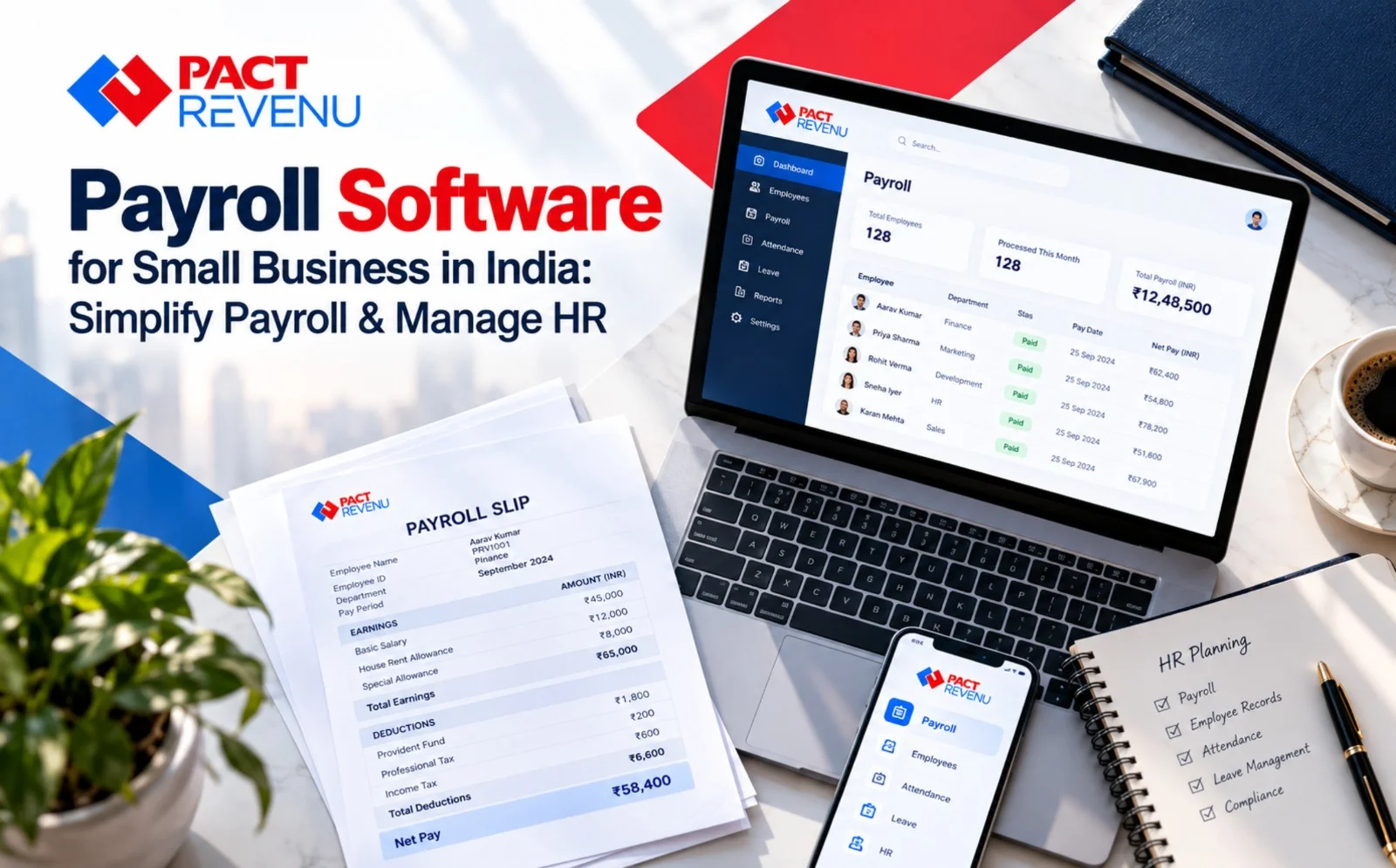
Payroll Software for Small Business in India: Simplify Payroll & Manage HR
For a small business, payroll may start as a simple monthly task. A few employee records, attendance details, salary calculations, deductions and payslips can often be managed using spreadsheets. But as the business grows, payroll becomes more difficult to handle manually.
Changes in attendance, leave, salaries, deductions, employee information and payroll records can create additional work for HR and finance teams. Even a small calculation or data entry mistake can require time consuming corrections.
This is where payroll software for small business can become useful. By bringing employee information, salary processing, attendance, leave, deductions, payslips and reports into a structured workflow, businesses can reduce repetitive administrative work and manage payroll more efficiently.
Why Payroll Becomes Difficult for Small Businesses
Payroll involves more than simply calculating an employee’s monthly salary. Several pieces of information need to be collected, checked, processed and recorded before salary can be finalised.
For example, a growing company may need to consider:
- Employee attendance and leave
- Salary structure and changes
- Deductions and adjustments
- Payslip preparation
- Employee records
- Payroll reports
- Statutory deductions and related responsibilities
- Payroll data for finance and accounting purposes
When these activities are handled through separate spreadsheets or manual processes, information can become difficult to track.
Consider a small company with 30 employees. The HR team may maintain attendance in one file, employee details in another, while the finance team calculates salaries separately. When information changes, someone has to update multiple records. This creates unnecessary work and increases the possibility of inconsistent data.
As employee numbers increase, a manual payroll process can become harder to maintain.
What Is Payroll Software for Small Business?
Payroll software for small business is a digital system designed to help businesses organise and manage employee payroll activities.
Instead of maintaining payroll information across multiple spreadsheets, businesses can use a centralized workflow for activities such as employee data management, salary calculations, attendance and leave information, deductions, payslips and payroll reporting.
A payroll system does not remove the need for proper payroll review. Businesses still need to ensure that employee information is accurate and that applicable statutory and tax requirements are correctly handled.
However, payroll software can reduce repetitive manual work and provide a more structured way to manage the monthly payroll process.
How Payroll Software Helps Small Businesses in India
Automate Salary Calculations
Salary processing can involve multiple inputs, including attendance, leave, salary components, deductions and adjustments.
A payroll processing software solution can organise these inputs within a defined payroll workflow. This can reduce the need for repetitive calculations and make it easier for HR and finance teams to review payroll before processing.
For a growing company, having a structured salary processing process can make each payroll cycle easier to manage.
Reduce Manual Payroll Errors
Manual data entry is one of the common challenges in spreadsheet based payroll management. A wrong figure, outdated employee record, or missed adjustment can affect payroll calculations.
Using an organised payroll system can reduce unnecessary manual entries by keeping relevant information together. It can also make it easier for authorised users to review payroll data before salary processing.
Software does not automatically guarantee error free payroll. Businesses should still review calculations, employee information and applicable deductions.
Manage Employee Data in One Place
Employee information often changes over time. New employees join, salaries are revised, employees take leave and personal or employment details may need updating.
Instead of maintaining different files for different HR activities, an HR payroll software solution can help businesses organise employee related information within a more structured process.
This can be particularly useful for small businesses where one HR or finance team may handle several responsibilities.
Simplify Payslip Generation
Preparing payslips manually every month can take additional administrative time, especially when employee numbers increase.
Payroll software can help businesses organise salary information and generate payslips as part of the payroll workflow, depending on the system’s functionality.
A properly maintained payslip can provide employees with a clear record of their salary components and applicable deductions.
Support Payroll Compliance
Payroll in India can involve responsibilities related to areas such as PF/EPF, ESI, Professional Tax, TDS and maintaining appropriate payroll records.
The exact requirements can vary depending on factors such as the business, employees, location and applicable rules. Regulations and thresholds can also change.
A payroll solution may help organise relevant payroll data and reports, but businesses should verify current statutory requirements through official government sources or qualified professionals when necessary.
Save HR and Finance Team Time
Payroll requires recurring administrative work every month. When teams spend significant time copying information between spreadsheets, checking calculations, preparing payslips and creating reports, less time is available for other business activities.
A payroll program for small businesses can help organise recurring payroll tasks into a more consistent workflow.
The goal is not simply to automate everything. It is to reduce avoidable manual work while giving HR and finance teams better visibility over payroll information.
Improve Payroll Records and Reporting
Payroll records are important for internal management as well as accounting and administrative purposes.
A structured payroll system can make it easier to access salary information, employee records, deductions and payroll reports when required.
Better record organisation can also help businesses answer practical questions such as:
- How much was processed in a particular payroll cycle?
- What deductions were recorded?
- Which employees were included in payroll?
- Are employee records up to date?
- What payroll information does the finance team need?
Payroll Software vs. Manual Payroll Processing
The difference is mainly in how information and recurring tasks are managed.
| Area | Manual Payroll | Payroll Software |
| Salary calculations | Often spreadsheet based | Organised within a payroll workflow |
| Employee records | May be spread across files | Can be maintained centrally |
| Attendance and leave | Manual data collection | Can be integrated depending on the system |
| Payslips | May require manual preparation | Can be generated through the system |
| Reporting | Manual spreadsheet preparation | Structured payroll reports |
| Error management | Requires extensive manual checking | Can reduce repetitive data entry work |
| Scalability | Becomes harder as employees increase | Designed to support growing payroll needs |
For a very small team with simple payroll requirements, spreadsheets may initially be sufficient. But when payroll becomes repetitive or difficult to track, software can provide a more organised approach.
What to Look for in Small Company Payroll Software
Choosing small company payroll software should start with the company’s actual payroll workflow rather than a long list of features.
Consider the following areas:
Salary Processing
Check whether the system can support your salary structure, calculations, adjustments and payroll workflow.
Employee Database
Employee information should be easy to maintain and update. Look for a system that helps avoid unnecessary duplication of records.
Attendance and Leave Integration
If attendance and leave affect salary calculations, integration between these processes can reduce manual data transfer.
Payslip Generation
Check whether the system can generate clear payslips and maintain appropriate payroll records.
Payroll Reports
Reports should help HR, finance and management understand payroll information without requiring extensive spreadsheet work.
Statutory Deduction Support
Evaluate whether the software supports the statutory payroll requirements relevant to your business and location. Always verify current requirements before relying on automated calculations.
Role Based Access and Data Security
Payroll contains sensitive employee information. Businesses should consider user permissions, access controls, data protection practices and security measures before selecting a system.
Ease of Use and Scalability
A payroll solution should be practical for the people who will actually use it. It should also be capable of supporting the company’s changing requirements as the workforce grows.
Customer Support and Integration
Consider the support available during implementation and regular use. If payroll needs to connect with accounting, attendance, HR, or other business systems, check the available integration capabilities.
Is Payroll Software Worth It for a Small Business?
Payroll software can become particularly useful when monthly payroll takes considerable manual effort, employee numbers are increasing, or HR and finance teams are finding it difficult to maintain accurate records.
For example, a startup may initially manage payroll using spreadsheets for 10 employees. As the company grows to 40 or 50 employees, managing attendance, leave, salary changes, deductions and payslips manually can become more time consuming.
The decision should therefore depend on the company’s payroll complexity, employee count, current workflow, budget and future requirements.
How PACT REVENU Can Help Simplify Payroll & HR
For businesses looking to bring greater structure to payroll and HR management, PACT REVENU can be considered as part of the technology evaluation process.
The focus should be on understanding your current payroll workflow, identifying repetitive administrative activities and selecting a solution that fits your business requirements.
Rather than choosing software simply because it has a long feature list, businesses should evaluate whether the solution can address their actual payroll and HR challenges.
For small and growing Indian businesses, the right approach is to combine practical payroll processes with technology that can support organised employee and salary management.
How to Get Started With Payroll Software
If your business is considering a payroll system, start with your existing process.
- Understand your current payroll workflow – Document how employee data, attendance, salaries, deductions and payslips are currently handled.
- Identify repetitive tasks – Find activities that consume significant HR or finance time every month.
- List required features – Prioritise salary processing, employee records, attendance, leave, payslips, reporting and other relevant requirements.
- Check compliance-related functionality – Review whether the system supports the payroll requirements applicable to your business.
- Evaluate usability and security – Make sure authorised users can work with the system comfortably and employee data is appropriately protected.
- Compare implementation and support – Understand how employee data will be organised and what assistance is available during implementation.
- Start organising payroll data – Clean and verify employee records before moving them into the new payroll workflow.
Conclusion
Payroll management becomes increasingly difficult when businesses rely on disconnected spreadsheets and repetitive manual processes. As employee numbers grow, maintaining salary calculations, attendance, leave, deductions, payslips, employee records and reports can require considerable administrative effort.
The right payroll software for small business can help create a more organised workflow for payroll and HR activities. It can reduce repetitive work, improve access to payroll records, simplify salary processing and give HR and finance teams a clearer way to manage employee information.
For Indian businesses, software selection should also consider applicable payroll and statutory requirements, data security, ease of use, scalability and ongoing support.
Ready to simplify payroll and spend less time managing repetitive HR tasks? Explore how PACT REVENU can help your business streamline payroll and manage employee processes more efficiently.
Frequently Asked Questions
What is payroll software for small business?
Payroll software for small business is a digital solution that helps organise employee information, salary calculations, attendance, leave, deductions, payslips and payroll reports. It can reduce repetitive manual work and provide a structured payroll workflow. Businesses should still review payroll information and verify applicable statutory and tax requirements before final processing.
Is payroll software useful for a small company?
Yes, it can be useful when payroll involves recurring manual calculations, multiple employee records, attendance and leave data, or regular reporting. A small company may begin with spreadsheets, but software can become more practical as employee numbers and payroll complexity increase.
How does payroll processing software reduce errors?
Payroll processing software can reduce errors associated with repetitive data entry and manual calculations by organising payroll information within a structured workflow. However, software does not eliminate the need for human review. Employee information, salary changes, deductions and applicable requirements should still be checked before payroll is finalised.
What should small businesses look for in payroll software?
Small businesses should evaluate salary processing, employee records, attendance and leave management, payslip generation, payroll reports, statutory deduction support, user access controls, security, ease of use, scalability, customer support and integration capabilities. The right combination depends on the company’s workforce, payroll process and operational requirements.
Can payroll software help with payslips and payroll records?
Yes. Depending on the software, businesses can use payroll systems to organise salary information, generate payslips and maintain payroll records. This can make it easier for HR and finance teams to access historical payroll information and manage recurring documentation.