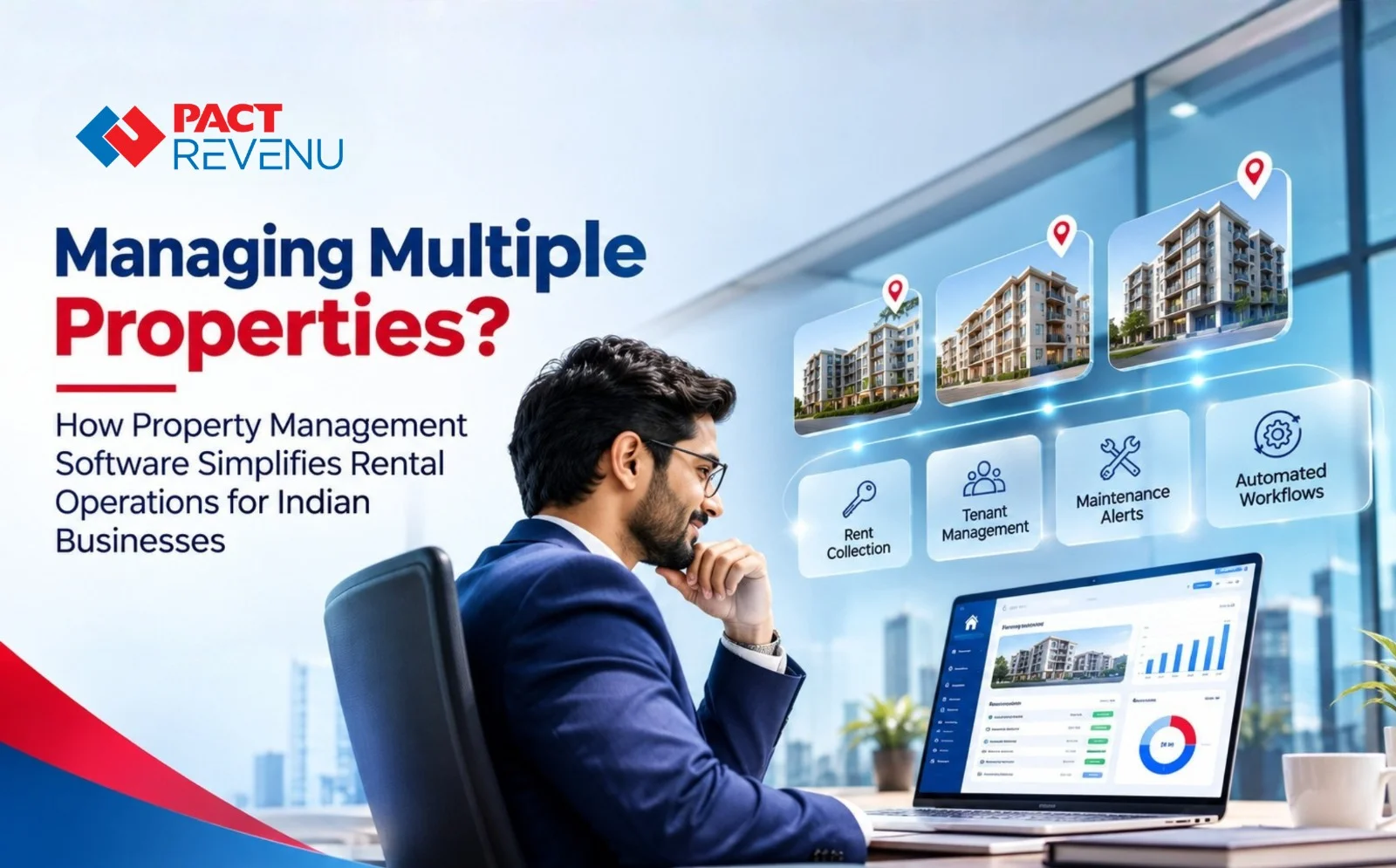
Managing Multiple Properties? How Property Management Software Simplifies Rental Operations for Indian Businesses
A landlord with three flats can run on a notebook and a WhatsApp group. A business with thirty units across two or three cities cannot. Rent arrives on different dates through different channels, lease renewals sit in folders nobody checks and a leaking pipe in one building waits while the team chases a cheque in another. Property Management Software brings these tasks into one system, so rent, tenants, maintenance and accounts stay connected as the portfolio grows. This guide explains where manual methods break down, how real estate management software changes daily rental operations and what to check before you choose a platform.
Challenges of Managing Multiple Rental Properties in India
Managing several rental properties gets difficult because each one adds its own tenants, due dates, repairs and paperwork and manual systems cannot keep them in step. Property management companies and individual investors usually run into the same problems:
- Tracking rent across properties: Payments arrive by bank transfer, UPI and cheque and someone must match each one to a tenant and month. Late payments surface days after the due date, which hurts cash flow.
- Managing tenants and leases: Agreement dates and rent escalation terms sit in separate files. A missed renewal can leave a unit vacant or underpriced.
- Coordinating maintenance: Requests come by call, message or in person. Without a log, repairs are forgotten and vendors get called twice.
- Keeping records by hand: Spreadsheets fall out of date and month end reconciliation eats hours.
- Limited visibility: Owners cannot easily see which property earns well and which one drains money on repairs.
- Delayed communication: Reminders and approvals depend on individual follow up, so small issues grow.
Each problem is manageable alone. Together they turn property management into a daily chasing exercise.
How Property Management Software Simplifies Rental Operations
It simplifies rental operations by keeping property records, tenant details, rent, maintenance and accounts in one shared platform, replacing scattered spreadsheets and manual follow ups.
Centralised property and tenant information
Every unit, tenant and document sits in one dashboard. A manager handling 25 rented units across two cities opens one screen instead of three files.
Automated rent collection and payment tracking
Invoices are generated on schedule and reminders go out before and after the due date. Unpaid rent for the month shows up in a single list, with no bank statement matching.
Lease and tenant management
Real property management software also handles lease and tenant management. Agreement terms, renewal dates and rent escalations are tracked in one profile, with alerts before a lease expires.
Maintenance scheduling and tracking
A repair request is logged, assigned to a vendor and tracked until closure. The cost is recorded against the property, so repeat problems become visible.
Financial management and expense monitoring
Rent invoices and expenses flow into the accounts. Owners see income and costs per property without waiting for a month end report.
Reports and operational visibility
Occupancy, rental revenue and expense reports show which properties perform and which need attention. Teams and tenants also work from the same records, so communication gets faster.
Best Practices for Managing Multiple Rental Properties
Good property management depends more on routine than on effort. These habits work with or without software, though digital tools make them easier to sustain.
- Maintain centralised property records: Keep agreements, tenant details and utility information in one place. Indian rental files often span several documents and quick access helps during disputes or audits.
- Establish a consistent rent collection process: Use fixed due dates and a small set of payment modes. Predictable routines reduce delays and awkward followups.
- Track lease renewals and agreement dates: Many residential agreements in India run for 11 months, so renewals come around fast. A tracked date prevents surprise vacancies.
- Schedule regular property inspections: Planned visits catch damage early, when repairs are still small and cheaper.
- Monitor maintenance expenses: Record every repair cost against its property. With expense tracking and financial reporting alongside rent, you can see which buildings cost more than they earn.
- Maintain transparent tenant communication: Acknowledge requests and share timelines. Tenants who feel heard tend to stay longer.
- Review property performance regularly: Check occupancy, collections and costs every month rather than once a year.
- Use digital tools to reduce manual work: Every task moved off paper frees time for tenants and growth.
Key Features to Look for in Property Management Solutions
Before shortlisting the best property management software for your portfolio, match its features to the way your team actually works.
- Multi property management: Properties, units and tenants should be viewable together and separately.
- Tenant management: Contact details, documents and history should live in one profile.
- Rent and payment tracking: Look for automated invoices, reminders and clear records of what is paid and pending.
- Lease and agreement management: The system should store agreements and warn you before renewals and expiries.
- Maintenance management: Look for service request and work order tracking that assigns vendors and follows each job to closure.
- Financial reporting: Income, dues and collections should be reportable by property and period.
- Expense tracking: Repairs and running costs should be tied to the right property.
- Dashboard and analytics: Occupancy and revenue should be visible at a glance.
Property Management Software earns its place only when it covers these daily jobs without extra workarounds.
Common Challenges When Adopting Property Management Software
New software brings its own friction. Most of it is avoidable with planning.
- Initial setup and data migration: Records are often spread across Excel files and paper. Solution: Clean and standardise the data first, start with one or two properties, then add the rest.
- Employee training and adoption: Staff used to spreadsheets may resist change. Solution: Train by role and begin with rent and maintenance entries. Property management companies with several teams benefit from a short checklist for each role.
- Integration with existing systems: Accounting tools and bank processes still need to connect. Solution: List the systems that must work together and confirm how data will flow before you commit.
- Choosing features that match requirements: Unused modules add clutter. Solution: Write down your five most frequent weekly tasks and select features around them.
- Data security and access management: Tenant documents and agreements are sensitive. Solution: Use role based permissions and ask about hosting options and backup practices.
How to Choose the Best Property Management Software for Your Business
Choose software that fits today’s portfolio, is simple enough for daily use and can grow with you. Consider these points:
- Scalability: Owners with a handful of units may find property management software for small landlords sufficient, provided it can later add more properties, tenants and users.
- Ease of use: If staff avoid it, the data goes stale. Run a demo with the people who will use it daily.
- Automation capabilities: Prefer real property management software that automates invoices, reminders and renewal alerts, instead of a generic accounting tool adapted for rentals.
- Reporting and analytics: Check that reports answer your actual questions, such as dues, occupancy and cost per property.
- Customisation options: Your payment schedules and approval steps may differ from a standard template.
- Integration with existing systems: Confirm how it works with your accounting and banking processes.
- Long term business requirements: Think about where the portfolio will be in three to five years, including new cities and property types.
Conclusion: Simplify Rental Operations with PACT REVENU
Managing many rental properties gets easier when rent, leases, maintenance and accounts live in one place. Property Management Software gives teams early warning on renewals and dues, a clear record of repairs and costs and reports showing how each property performs.
PACT REVENU is built for this kind of work. Its real estate capabilities cover lease and contract tracking with renewal alerts, tenant billing with payment reminders, maintenance and service requests, multi property portfolio management from a single dashboard and rental cash-flow forecasting. It also syncs with accounting, so rent invoicing and financial records stay connected. Deployment options include SaaS, private cloud and on premise.
To see how it fits your portfolio, explore PACT REVENU for real estate operations and request a personalised demo.
Frequently Asked Questions
What is property management software and how does it work?
It is a digital platform that stores property, tenant, lease, rent and maintenance records in one place. Users add properties and tenants, set rent schedules and renewal dates, log repair requests and record expenses. The system generates invoices, reminders and reports, giving owners a current view without manual spreadsheets.
How can businesses manage multiple rental properties efficiently?
Businesses manage multiple rental properties efficiently by centralising records, fixing a consistent rent collection routine and tracking lease dates and repairs in one system. Regular inspections and monthly performance reviews catch problems early. Digital tools reduce manual follow ups, so teams spend less time on paperwork and more on tenants and properties.
Is this type of software suitable for small landlords?
Yes. Property management software for small landlords can replace notebooks and spreadsheets with organised rent, tenant and lease records. Even a landlord with few units benefits from due-date reminders and expense tracking. Choose a platform that is simple to start with and can add properties and users later.
What features should businesses look for in property management software?
Look for multi-property management, tenant and lease tracking, rent and payment records, maintenance management, expense tracking and financial reports. A dashboard helps owners see occupancy and collections quickly. Also check ease of use, access controls and whether the platform can grow with your portfolio.
How does rental management software simplify rent collection and tenant management?
It simplifies both by automating routine steps. The system issues rent invoices on schedule, sends payment reminders and records what has been received against each tenant. Lease terms, renewal dates and tenant details stay in one profile, so teams spend less time matching payments and searching through files.